



What is papilloma or papillomatosis?Papilloma is a growth on the surface of the skin caused by the human papillomavirus (HPV).For the most part, they are benign, not very scary, and do not pose a serious threat to life.
These formations can appear in various places of the body (chest, thighs, chin, neck, face, cheeks, head, abdomen, navel and back), and are much less likely to appear on mucous membranes.At the same time, despite all the seemingly harmless nature of these growths, the risk of turning into malignant lumps should never be excluded.
Species and types
The human papillomavirus includes over 600 varieties of strains (a culture of microorganisms of a certain type, derived from a specific source and having characteristic properties), under the influence of which the formation of various categories of papillomas occurs.
In medical practice, it is customary to divide the types and types of papillomas depending on their origin, how they look, how quickly they grow and where they are localized.Certain papillomatous growths appear in the intraoral cavity, in the vagina, on the penis and in the bladder area.
Important: Identification of the classification of papilloma is very necessary in terms of choosing the appropriate treatment method and analyzing the possible development of papilloma into malignant neoplasia.
So, what types of papillomas are there:
- simple (vulgar) warts.Most often, their appearance is caused by the development of mixed types (26, 27, 28, 29, 41, 63, 77) of HPV.This type of papilloma belongs to the group of benign ones; its formation is accompanied by burning and stabbing sensations in the place where a ball-shaped growth later appears.Gradually, the papilloma acquires a dry, keratinized, uneven surface and changes color to a darker one.The size of a simple wart is from one millimeter to a centimeter.The predominant location of such papilloma in adults is the hands, the area of the fingers and interdigital space, and the outer side of the palms.This variety can also be observed in children on the knees and hands.Vulgar papillomas are divided into single and multiple (an additional one grows next to the main one).The virus that causes warts is transmitted through household contact.Prevalence is 70%;
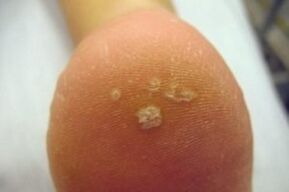
- plantar warts.Growths in the form of papilloma on the feet, the leg itself, in those infected with the first, second and third types of HPV.Very often they are confused with calluses, but a number of characteristic signs will indicate this type of papilloma.In particular, a smooth surface, the presence of pain when pressing on the papilloma when wearing tight shoes, the formation of small blisters around the papilloma that later transform into “mosaic papillomatosis.”Prevalence is 30%;
- flat warts.This type of papillomas protrudes slightly on the skin (2 mm), or subcutaneously, has the shape of an elongated circle and is localized on the facial and nasolabial parts, in the chest area, as well as on the labia.In women, flat papillomas appear on the pubis and in the cervical area.Most often, these papillomas are white, flesh-colored and only occasionally acquire a dark tint.If the growth is damaged, there is a risk of it developing into cancer, especially if squamous cell papilloma develops in parallel with hyperkeratosis (the process of thickening of the epidermal layer).Prevalence is 4%;
- filamentous papillomas (acrochords).This type is caused by the second and seventh types of human papillomavirus.It grows on a narrow stalk and has a long shape.During its initial germination, the papilloma looks like a small bulge, which, as it develops, begins to hang down, becoming soft, sometimes watery to the touch.The filamentous appearance affects people over 40 years of age, both men and women equally.Location: upper part of the eyelids, neck, armpits, mammary glands, groin area;
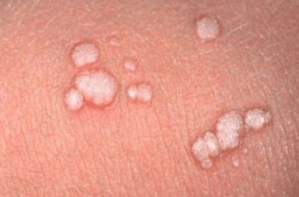
- Pointed papillomas or (condyloma).Papillary-like growths, growing either individually or in several pieces.During the growth process, such papillomas unite, the surface becomes rough, and the color ranges from beige to pink.Scallop-shaped growth.Condylomas are caused by sexually transmitted types of HPV.They are localized in the perianal area (anus), groin, between the legs, inside the urethra, vagina, vulva (vestibular papillomatosis), on the cervix and on the inner thigh.They grow very rapidly - the speed of their union and the scale of distribution is up to three days.A type of condyloma is papular pustules that have a smooth, round shape;
- basal cell papillomas.A formation of benign origin that does not have the properties to grow and degenerate into malignant neoplasia.Diagnosed mainly in older people;
- Choroidpapilloma.Neuroepithelial benign neoplasia growing from the tissue of the choroid plexuses of the brain.
In addition to the listed varieties, papillomas are divided into types, assessed in terms of the degree of cancer risk:
- high risk of cancer development (16, 18, 45, 36);
- average risk of cancer (33, 58, 51, 52, 31, 35);
- non-oncogenic papillomas (6, 11, 42, 43, 44);
- squamous cell papilloma - appears due to the proliferation of epithelial cells and is observed in the elderly.Marked by slow development.The shape is wide at the base, round, on a thin stem.At the initial stage of development, it is mobile, color from beige to dark brown.The size of this type of papilloma can reach 1.5-2 centimeters.With periodic contact, these formations become inflamed, which leads to cell mutation and the emergence of a squamous cell type of oncology;
- inverted papilloma is an extremely rare form that has certain characteristics of formation and course.Specific signs are: localization in the maxillary, nasal, frontal and paranasal sinuses;unilateral lesion with multiple growths;ingrowth into the bones, leading to lesions of the palate, sinuses, skull and eye walls;relapse five or ten years after full treatment.This type of papilloma is manifested by frequent nasal congestion accompanied by bloody discharge or bleeding.If the formation becomes large, a change in the facial jaw and a shift in the eyeball are observed.
Important!According to statistics, in 5% of patients who do not take medication measures on time, this type of papilloma becomes malignant.
Why does the disease occur?

According to medical statistics, today almost 90% of people are carriers of the human papillomavirus, which is the main cause of papilloma.This viral disease exists in the body for a long time without showing any external signs.However, various internal infections and viruses, exacerbation of chronic diseases, abnormal nutrition and constant stressful situations suppress the immune system and provoke the formation of papilloma-like growths on the skin.
In this case, the main factors facilitating the penetration of the virus into the human body are:
- promiscuous and unprotected sexual relations;
- consumption of excessive amounts of alcohol, tobacco, and other drugs;
- weak immune system;
- imbalance in metabolism;
- diseases of the gastrointestinal tract;
- poor hygiene of the oral cavity and intimate areas;
- movement of the virus from mother to child during pregnancy (congenital factor).
Pay attention!HPV transmission does not always occur through direct contact.Very often, particles of this virus settle on clothes and personal hygiene items.Also, the risk of contracting HPV in public places and in medical institutions cannot be excluded.
What are the common symptoms of the disease?
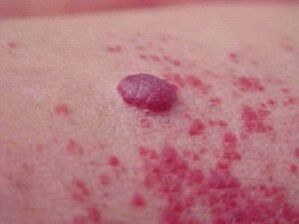
This process usually does not have pronounced symptoms.The first and important harbinger of HPV is the appearance of condylomas and warty papillomas.And taking into account the fact that this virus is also oncogenic in nature, these growths should not be considered completely harmless manifestations.
Sometimes, papillomas can manifest themselves with symptoms such as:
- red spots around the affected area;
- scabies;
- excessive skin dryness and flaking;
- feeling of “pricking needles”;
- discomfort when moving, if localized on the genitals.
Manifestations of papilloma depend on the nature of its localization
So, in gynecology, if intraductal (intracystic) papilloma of the mammary gland develops, the following are observed:
- redness around the nipples, burning and itching;
- severe pain and discharge with droplets of blood when pressing on the nipples;
- spontaneous discharge of beige or green color.
This type is benign in nature, but if it is not eliminated, the formation develops into a malignant tumor, leading to breast cancer.In appearance, the papilloma located on the nipple resembles a nipple-type growth, and its color differs significantly from the color of the skin.
The development of this form of mammary papilloma is caused by: artificial termination of pregnancy, excess weight, impaired ovarian function, viral diseases, and weak immunity.
Women who drink alcohol and cigarettes and have promiscuous sex should be considered a particular risk group.It is possible to cure intraductal papilloma only through surgery with subsequent observation by a mammologist and gynecologist.
In the case of the formation of papilloma in the throat, at the initial stage the symptoms are not pronounced, however, when the growth occurs, the symptoms are expressed as follows:
- difficulty swallowing;
- pain in the tonsil area;
- feeling that something is bothering you;
- unreasonable deepening or thinning of the voice;
- shallow and rapid breathing;
- small rashes in the throat.
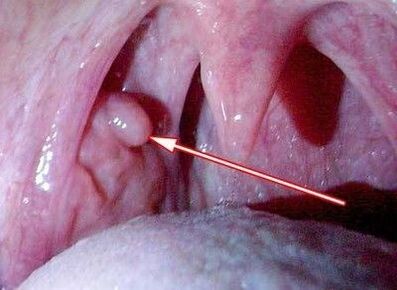
The reasons for the formation of such papillomas are: chronic and infectious diseases, tobacco and alcohol use, unprotected sexual intercourse, visiting public places.Removing papillomas from the mouth, taking antiviral medications and a vitamin complex gives a good effect in treatment.
Important: It is necessary to remove all papillomas, since even one such growth will provoke infection of the entire body.You cannot remove papillomas at home, as this is dangerous and is strictly prohibited by doctors.
With cervical papilloma, signs of a pathogenic process are manifested in the following:
- inflammation and enlargement of lymph nodes;
- itching in the genital area;
- discharge of a greenish, whitish hue, sometimes with a pronounced fetid odor.
The causes of papillomas in this area: sexual intercourse with a man infected with the human papillomavirus, suppressed immunity, poor personal hygiene, excessive consumption of cigarettes and alcoholic beverages, intrauterine infection.Untimely detection of formations in the form of papillomas on the cervix threatens the development of oncology.Treatment in this case consists of removing the growths and using complex drug therapy.
Please note: Papillomas can also appear in the intimate area of men (on the scrotum and testicles).However, males are much less likely to face the threat of cancer.

The formation of papillomas on the lingual part (papillary-like compaction up to two cm in size) is caused by close contact with an infected person and in the case of shared use of household appliances.This type of growth can also appear in children, due to the fact that children tend to “put everything in their mouth.”Treatment is carried out by eliminating the source of infection and taking the necessary medications.
Diagnostic methods
To determine whether you are a carrier of human papillomavirus infection, you need to contact an immunologist or dermatologist.To identify the etiology of papillomavirus, instrumental and laboratory tests are indicated, including a general and biochemical blood test, polymerase chain reaction (PCR), and extraction of a piece of papilloma for biopsy.
Important: If the papilloma has acquired a black color, is swollen, bleeding, or purulent blisters appear on it, then this is an obvious symptom of the beginning of the disease progression and a serious reason to immediately contact a specialist.
Methods of treating the disease

To understand how to treat papillomaviruses, you need to know that the choice of treatment depends on where the papillomas are located, what causes them and what type they are.In 90% of papillomas on the body, they are eliminated surgically, if the location of the growth allows, removal with liquid nitrogen and surgitron (radio knife) is used.The latter method is recognized as very effective and painless in eliminating not only the formation itself, but also its roots.This indicates that it allows you to permanently rid the treated area of skin from the reappearance of growths.
Surgical removal of papillomas can also be carried out through:
- electrical destruction (use of high-frequency current);
- laser radiation;
- scalpel.
Sanitation of papillomas also includes the use of a conservative method of treatment by prescribing antiviral drugs.
In some cases, if the oncological factor is excluded, an ointment for papillomas, which can be used at home, is very effective in use.
Please note: the use of traditional medicine (tincture of celandine and dandelion, garlic and apple juice, castor oil) is essential in the fight against warts and papillomas on the body.
Disease prevention
Considering that today, medicine still does not know a specific medicine that will permanently relieve patients from the human papillomavirus, an important factor in preventing this disease is a set of preventive measures, which include: strict personal hygiene, timely and healthy nutrition, careful treatment of all wounds, protected sexual intercourse, complete disinfection after visiting swimming pools and saunas, periodic examination by an immunologist, general health maintenance.