


A wart is a benign neoplasm on the skin, from which no person is immune.Everyone who cares about their own health should know what warts look like, photos of which show various types of growths.Knowing the specific signs of different types of tumors will help you notice the growth in time and consult a doctor with questions about its treatment or removal.
What warts look like: photos and features
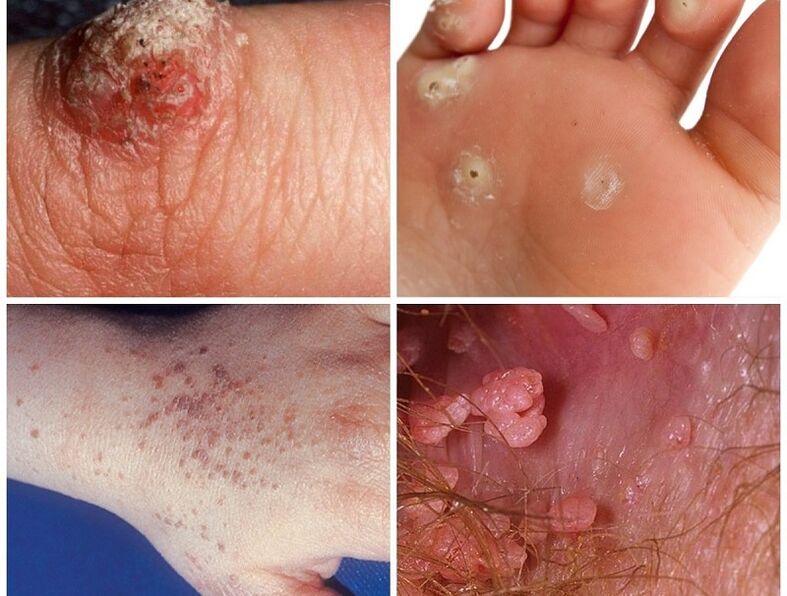
The human papillomavirus causes the formation of various growths on the skin.
Warts, photos of which are presented in huge quantities on the Internet, can take on various forms.The reason is the variety of strains of the HPV virus, which causes the process of epithelial cell division and the appearance of growths.
The following types of neoplasms are distinguished:
- vulgar warts;
- papillomas;
- flat warts;
- keratomas;
- filamentous warts;
- condylomas;
- plantar warts.
In fact, any type of growths caused by the human papillomavirus (HPV) can be called papillomas, as this is a general designation for a type of benign neoplasm.
Keratomas are the only type of growths from the list listed above that are not caused by a virus.Such neoplasms appear in older people, which is due to age-related changes in the epidermis.
Features of vulgar warts
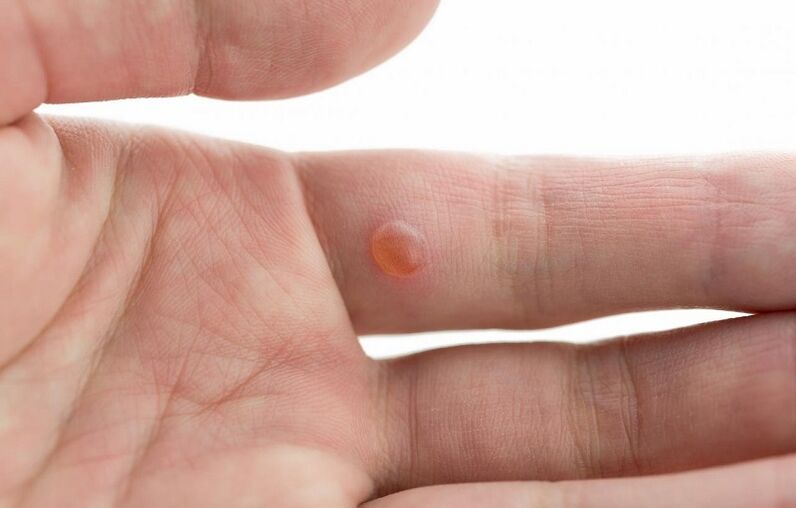
Most often, such warts form on the fingers; if they interfere, they must be removed.
Wart vulgaris is the most common type of growth.It is very easy to recognize it from a photo because of its characteristic features.It has the shape of a small ball, rising above the rest of the epidermis.The ball is homogeneous, quite dense, palpation is painless.Vulgar warts can be lightly or heavily pigmented.Most often, they do not differ in color from the rest of the epidermis, but they can be brown, resembling moles in color.
The size of vulgar warts ranges from a few millimeters to a centimeter in diameter, large sizes are a rare exception.
Hair can grow from the body of the wart if the growth is located on a hairy area of the body.This is completely normal and is not a pathology.
A wart can be damaged in everyday life.An accidental tear of the growth is accompanied by profuse bleeding.This is due to damage to the capillaries that feed the wart.Most often, such warts are located on the hands, fingers and feet.
Rubbing the growth with clothing can lead to swelling and inflammation.In this case, discomfort and pain appear.As a rule, if a wart is in the way, it is recommended to remove it.
What do papillomas look like?
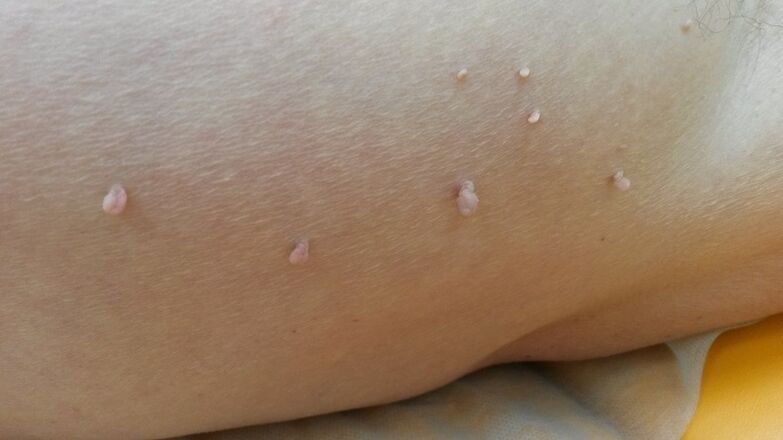
When papillomas appear, it is necessary to determine the strain of the virus - some types of HPV are oncogenic.
Having figured out what a wart looks like in the photo, you should consider another common type of growth - papillomas.They are a small soft ball on a stalk, which noticeably rises above the rest of the epidermis.
Features of papillomas:
- small sizes;
- slight pigmentation;
- soft homogeneous structure;
- no discomfort during palpation.
The thin stalk provides nutrition to the body of the papilloma.The blood supply to the growth is provided by capillaries, so if the leg is damaged, bleeding begins.Under normal conditions, papillomas do not hurt or cause discomfort, but when compressed by fabric, shoe straps or other items of clothing, the papillomas can become inflamed.It causes pain.Damage to papillomas is potentially dangerous, so it is preferable to remove them in a timely manner.Depending on the strain of the virus that caused the formation of growths, papillomas can degenerate into malignant neoplasms.To be fair, it should be said that this happens very rarely, in no more than 4% of cases.
Localization of papillomas: back, armpits, inguinal folds, neck, but can also appear on other parts of the body.
Flat warts in the photo
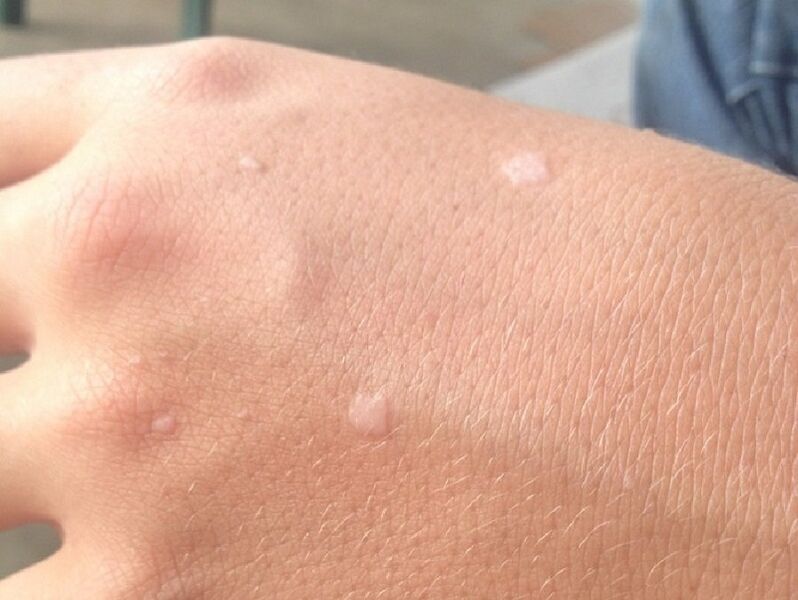
Flat warts are formations on the skin that are slightly raised above its surface.
Flat warts occur in children and adolescents.They are easily recognizable from the photo: they are flat, small growths of predominantly yellowish color.They resemble small plaques or bumps on the skin and are almost invisible.The surface of flat warts is smooth and shiny.
This type of growth is safe.Flat warts do not hurt or cause discomfort, they are difficult to damage in everyday life, and they almost never degenerate into malignant neoplasms.
Flat warts are removed mainly for aesthetic reasons, since they often appear on the face and neck.
Keratomas
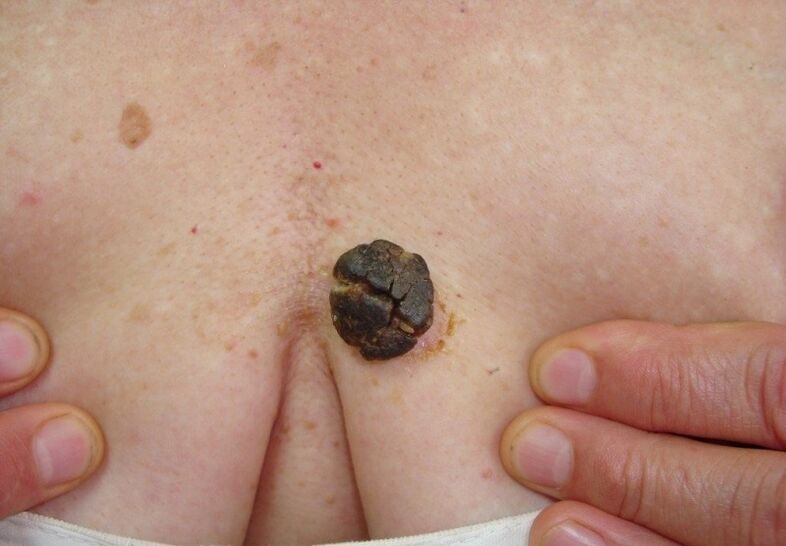
Keratoma has a different nature of formation and occurs in older people.
This type of growth is not viral, but age-related.Observed mainly in older people, the formation of keratomas is often accompanied by pigmentation disorders in other parts of the body.
Keratomas are small, dark, irregular spots with a keratinized top layer.Their surface is uneven, hard to the touch, and flaky.Despite this, keratomas are not dangerous.They do not hurt or cause discomfort.Essentially, these are small areas of skin in which pigmentation is impaired and keratinization processes are enhanced.
Symptoms of filamentous warts
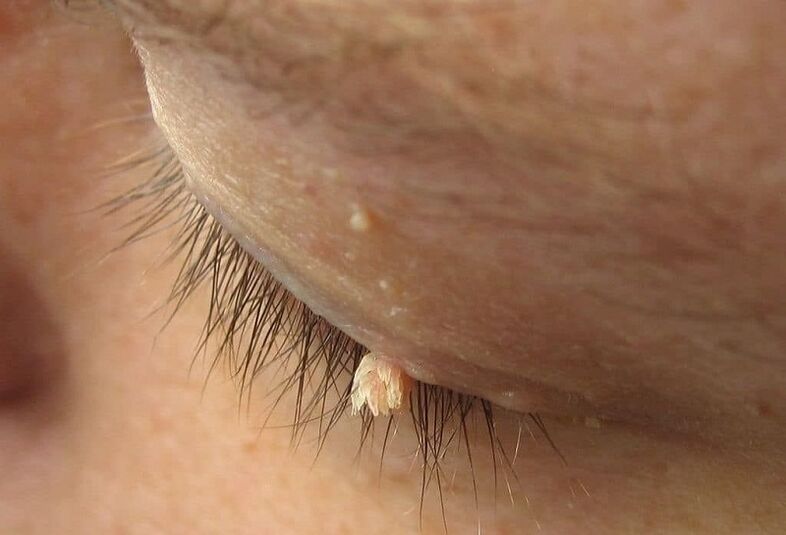
Filiform warts usually affect delicate areas of the skin.
Filiform warts are small, oblong-shaped growths on the skin.They occur in places with thin and sensitive skin, mainly on the neck, around the mammary glands, and in the armpits.Filiform warts look like a stalk of papilloma without a round body on top.They are rarely pigmented and most often do not differ in color from the rest of the epidermis.The size of the growths does not exceed several millimeters in length and diameter.
Such growths appear in middle-aged and elderly people.In children, adolescents and young people under 35 years of age, filamentous warts are not observed.
How to recognize condyloma?
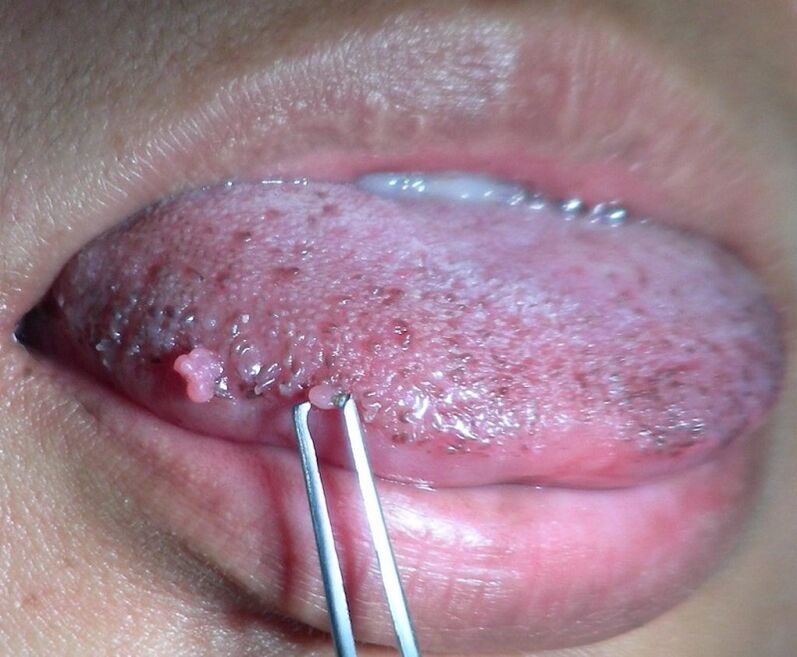
Condylomas are located on the mucous membranes - in the mouth, on the genitals.
Condyloma is a small growth of overgrown epithelial cells.The main feature is the papillary structure.Condylomas occur on the mucous membranes, including the genitals.They can cover the labia minora in women, the walls of the vagina, the cervix, urethra, head and shaft of the penis.
The virus that causes condylomas is transmitted sexually.
Condylomas can appear either singly or in groups.In the second case, they gradually grow together, forming large growths, shaped like a cockscomb, broccoli or cauliflower.Their structure is heterogeneous, the color is pink or light brown.
Condylomas on the genitals are especially dangerous.They grow quickly and can affect the urethra and cervix.Condylomas on the cervix are potentially dangerous, as their cells quickly degenerate into a malignant neoplasm.
Plantar warts
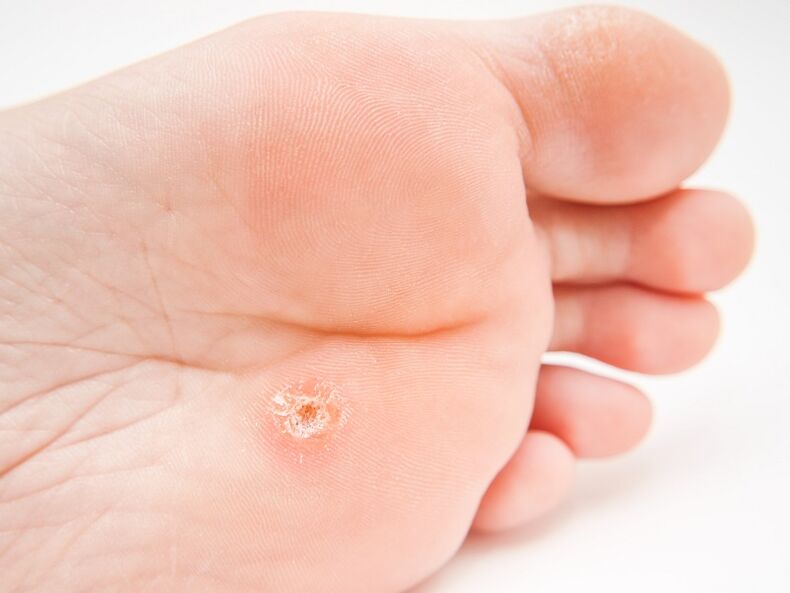
Plantar warts cause significant discomfort when walking.
A plantar wart, or plantar wart, is a special type of growth that exclusively affects the feet.Outwardly, they look like small calluses with keratinized skin around them.The color is often yellowish-white.The peculiarity of the spine is that it quickly increases in size and hurts when walking.This is due to the fact that its root is located deep under the skin and irritates the surrounding tissues when walking, squeezing them.
Spines are equally common in adults and children.They grow quickly, so they require timely identification and removal.A plantar wart practically does not rise above the healthy epidermis, representing a small plaque of keratinized skin.
Wart root
The papilloma itself, wart or condyloma is only the visible part of the growth that rises above the skin.The wart itself grows from the inside, from the root.It is the root that plays the main role in the formation of the growth, therefore all methods of removing warts are aimed at destroying it.
What exactly the roots of a wart look like depends on the type of growth.In vulgar warts, condylomas and papillomas, the roots are externally invisible, as they are located under the skin.The root is a proliferation of epidermal cells that extends deep under the skin and includes small capillary vessels through which blood supply to the growth and its growth are ensured.
The root of a wart and papilloma practically replicates the visible part of the neoplasm, but is located deep under the skin, so it is impossible to see it.
What the roots of a wart look like depends on the size of the root system of the growth.Moreover, the larger the papilloma itself, the larger its root.The only root that you can notice on your own is the base of the spine.It is a light compaction around the growth.If the spine is large, its root becomes darker, which is noticeable.
How to avoid making a mistake with a diagnosis?
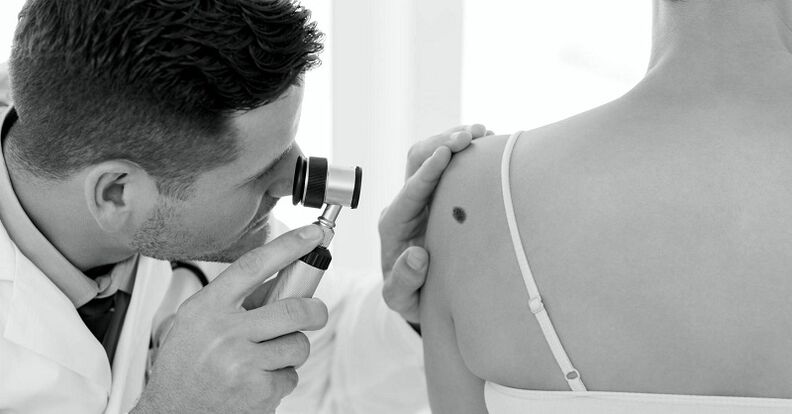
Only a doctor can correctly diagnose the type of formation.
Having figured out what warts that appear on the body look like and how papilloma and condyloma appear, it is important to understand that the diagnosis should only be made by a specialist.In addition to determining the type of growth from a photo, it is important to undergo tests to identify the strain of the virus and its activity.This will allow you to correctly draw up a treatment regimen so that warts do not appear again immediately after treatment.For this purpose, it is recommended to consult a dermatologist immediately after detecting the first growth.If the virus is active, there is a risk of multiple benign skin growths appearing on different parts of the body.