


Papillomavirus is the general name for a family of viruses that can provoke the appearance of papillomas and warts on the human body and cause the development of cervical or genital dysplasia.
That is why it is important to begin treatment of the papilloma virus and the papillomas themselves in the early stages.We'll talk about how to do this in the next article.
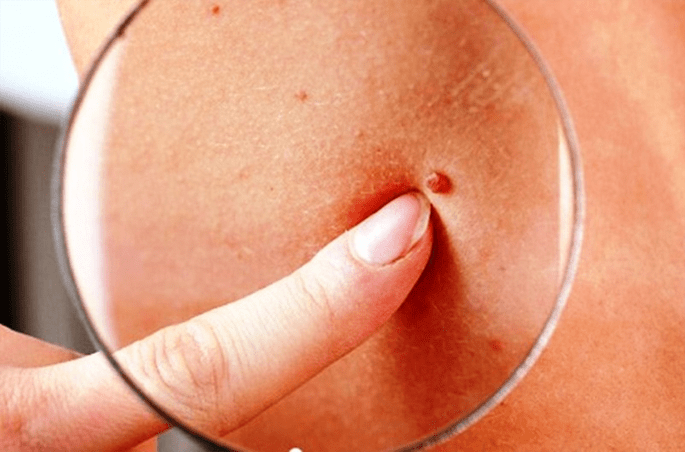
Causes
The main cause of the occurrence and development of papilloma is HPV - human papillomavirus.However, this is far from the only factor.Papillomas can appear as a result of the following phenomena:
- stressful or depressive conditions;
- reduced immunity;
- promiscuity or neglect of contraception;
- alcohol abuse;
- susceptibility to infectious diseases;
- long-term diseases of the gastrointestinal tract;
- undergoing a course of treatment with potent drugs (for example, antibiotics).
If basic hygiene rules are not followed, the risk of neoplasms increases in public recreational areas - saunas, beaches, baths or swimming pools.
How to treat papillomas
Treatment of papilloma with modern medicine is quite quick and painless.For this, there are a number of techniques that differ in the principle of impact, quality and cost.
In most cases, the patient can choose the appropriate method on his own, but sometimes you have to follow the doctor’s recommendations if the situation is severe.
Laser treatment
This method is considered to be the most effective and safe.Its advantages include:
- absence of mechanical damage to the skin, which eliminates the occurrence of scars;
- speed of healing;
- no bleeding after removal;
- speed of removal (the procedure takes less than 1 minute);
- 100% sterility and safety;
- painlessness due to control of the level of operating temperatures.
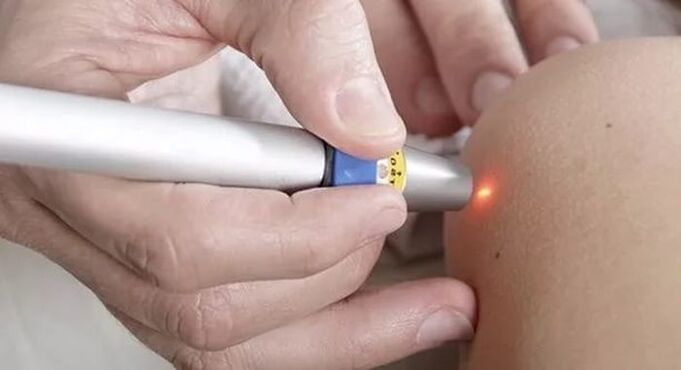
However, not everyone can treat papilloma with a laser.Among the contraindications to this method for a woman are pregnancy, as well as a fresh tan at the site of papilloma, cancer, viral diseases, and the presence of herpes at the site of the tumor.
Electrocoagulation technique
Common methods of treating papillomavirus include electrocoagulation.This method is used to remove various benign tumors on the human body and involves applying current to the affected area.The specifics of the procedure can be expressed in the following aspects:
- Since the removed material is not completely destroyed, after removal it can be analyzed by a specialist to determine whether it poses a risk to the patient in the future.For example, if there are symptoms of cancer, then it is imperative to analyze the material.
- Suitable for any age and skin type.
- Constant visual control and the ability to adjust settings provide an individual approach to organizing the procedure.
- A fairly quick procedure, requiring up to 10 minutes depending on the size of the formation.
- No infection or bleeding.
- Relatively cheap method.
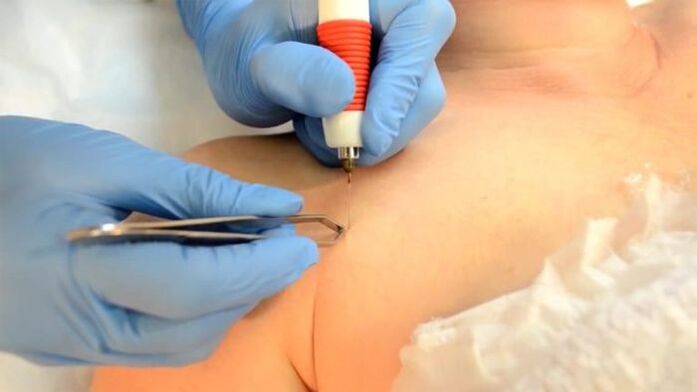
If electrocoagulation is carried out incorrectly, scars may appear at the site of removal, and there is also a high probability of relapse.Also, the procedure is relatively painful, and the healing period after it is longer than after others, up to 10 days.
Freezing
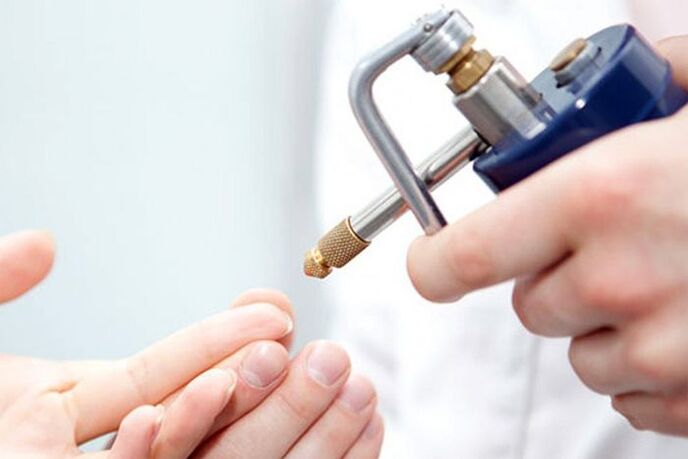
You can cure papilloma so that it no longer appears, that is, reduce the risk of relapse to a minimum, using liquid nitrogen.
At the beginning of the procedure, low temperatures specifically affect the damaged area of the skin without affecting the healthy one, then removal occurs.The effect of low temperatures begins instantly, which shortens the process several times.In this case, the patient does not feel pain.
Cauterization with liquid nitrogen is not recommended only in cases where the size of the neoplasm is more than 1 cm or if there are skin diseases located next to the papilloma.
Chemistry against the virus
Medicine offers treatment for HPV using chemical methods.This option is more aggressive than others, however, not the best.It consists in the fact that the papilloma is cauterized with a strong chemical substance, which includes salicylic acid or a similar ingredient, after which it becomes covered with a crust for several days and finally, soon the crust falls off.
Despite the fact that the method is even used to remove tumors on the genitals or neck, its use is painful, requires special care and significantly increases the risk of scarring and other negative consequences.
Surgical treatment
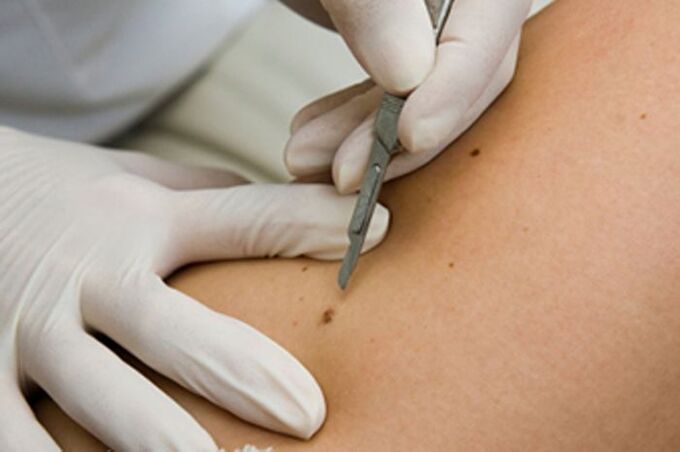
In this case, the papilloma is cut off using a scalpel under local anesthesia.The disadvantage of the technique, first of all, lies in the healing process - after all, it involves wearing a pressure bandage.
The main advantage of this method is that it ensures high-quality removal of tumors of any size and at any depth.
Treatment of papilloma with folk remedies
Mistrust of modern medicine and other reasons lead people to treat human papillomavirus at home.This does not require any medicine - nature will help with everything.
Essential oils
Tea tree or wormwood oils have an antiviral effect.They help get rid of tumors due to their unique composition and regular use.
An important condition is to apply oil to the damaged area pointwise, avoiding contact with healthy areas.Regularity is also important.A high-quality effect can only be obtained with daily use.
You should not resort to this method if the patient has an allergy or individual intolerance to oil.
Celandine
The celandine removal method is better than any tablet: it provides a powerful effect at home thanks to the scalding effect of its juice.In this case, fresh natural plant juice is the most effective option.
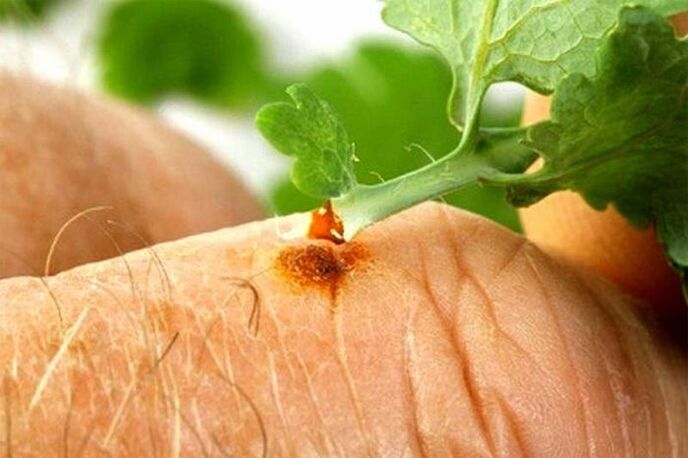
Cauterize the papilloma every day and, depending on its depth and size, within 15–30 days you will be able to get rid of it.
The technique is not recommended for people with sensitive skin, as the risk of irritation is high.
Salicylic acid
Why salicylic acid is effective in the fight against tumors:
- suppression of the secretion of sweat and sebaceous glands;
- neutralization of the focus of inflammatory processes.
To make the acid work better, steam the damaged area before the procedure and wash it well using laundry or toilet soap.The papillomavirus can only be affected by regular exposure before bedtime.
Castor oil treatment
This folk method is considered the most effective and safe.However, it is important to work with it correctly:
- Soak a cotton pad in castor oil and rub the growth with massaging movements.The action should be repeated up to 5 times a day.
- For better impact, the papilloma is sealed with adhesive tape from above.
With the best outcome, it will be possible to make the skin clear of “growth” within 3–5 days.
Treatment with kerosene and walnuts
A mixture of kerosene and walnuts will help get rid of tumors in 7 days.It is prepared as follows:
- Take green walnuts and kerosene in a ratio of 2:1.
- The nuts are crushed and placed in a jar, filled with purified kerosene.
- The solution is filtered well and stored in a dark place.
The affected area should be treated daily in the morning and evening.
Hydrogen peroxide
It is recommended to use hydrogen peroxide as the main medicine with a multifunctional effect.There are 2 methods for treatment:
- Classical.Every day, 2 times a day, the papilloma is spot-treated with hydrogen peroxide as much as necessary.Sometimes the course of treatment can last up to 1 month.
- Compression.Once a day, a gauze or cotton swab is moistened with hydrogen peroxide and applied like gauze to the damaged area.It is important to change the compress once a day.
This method has proven to be painless and effective, however, it is important to consider that hydrogen can cause irritation, especially on sensitive skin.
Which doctor treats papillomas
Several specialists are involved in the treatment of papillomavirus:
- Oncologist.To eliminate the possibility of developing cancer at the site of removal or to prevent danger if the neoplasm is low-quality, it is the oncologist who carries out the initial diagnosis.
- Dermatologist or cosmetologist.Specialists in this field remove papilloma where cosmetic “jewelry” work is needed - face, neck, shoulders, chest area.
- Surgeon.Complex procedures and removal methods (such as surgery) should be performed by a professional surgeon to prevent complications.
- Dermatovenerologist.This specialist treats and diagnoses papillomas in the genital area.
Usually, they turn to dermatologists for initial diagnosis, and for subsequent diagnosis, if there is a suspicion of malignancy, to an oncologist.
Disease prevention
Treatment of human papillomavirus infection is not always limited to removal of tumors.If the virus has already spread in the body, the process of fighting it can take a long time.That is why it is better to neutralize and prevent a disease than to treat it.For this, doctors have developed a number of useful preventive measures:
- Avoid bad habits as much as possible, especially drinking alcohol.
- Always use protection during sexual intercourse, including anal and oral sex.Remember to practice good hygiene and be careful when sharing sex toys.
- In some cases, vaccination is carried out.It is possible to carry out vaccination from the age of 9, it is low-reactive and non-aggressive, and does not require a preliminary examination.
It is also recommended to go for routine examinations once a year in order to recognize the disease in the early stages.Statistics show that sexually active people by the age of 50, one way or another, become infected with one of the forms of HPV in an active or passive form.
Reviews about the treatment
- “An ugly papilloma on my neck prevented me from wearing off-shoulder dresses and constantly made me feel uncomfortable.When I went to a dermatologist, he advised me to remove it with a laser - this really scared me.Then I decided to remove the papilloma on my own.I bought castor oil and rubbed the papilloma 3-5 times daily.After a couple of weeks, the papilloma began to shrink, and then dried up completely.”
- “I didn’t notice the papilloma in an intimate place right away: one day I felt discomfort while walking, after which I noticed it.I immediately got scared and went to the gynecologist.There, doctors examined everything, conducted a visual analysis and concluded that the neoplasm was benign.I sighed calmly.I chose the laser removal method.The removal was quick and painless, now I don’t worry about my health, but I decided not to refuse routine examinations anymore.”
- “A large papilloma on my leg interfered with my life for a long time: it constantly rubbed against my clothes, causing pain.I came to the decision to remove it.After the examination, the doctor said that for such large papillomas, only surgical removal can be used.At first it scared me, but I had no choice.The procedure was performed under anesthesia, no pain was felt.After removal, a small spot remained, but after a couple of weeks it disappeared.I'm completely satisfied."